Congratulations – you’ve found:
The Sun
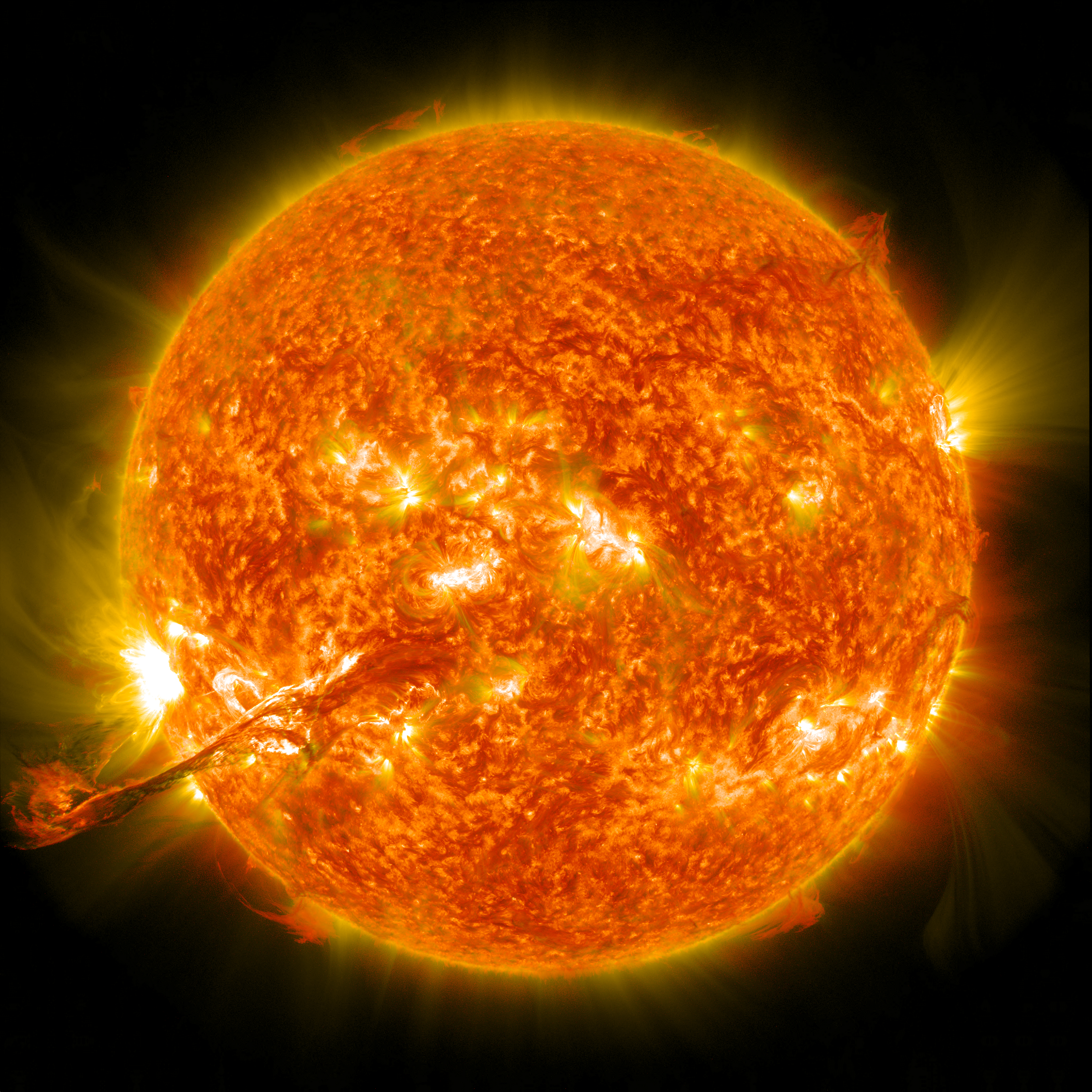
The Sun is a huge ball of very hot gas that shines in the sky. It’s like a giant, glowing light bulb that helps us see during the day. It’s so big that you could fit more than a million Earths inside it! The Sun is really far away from us, but it’s the closest star to our planet.
Fun Facts:
- Super Hot: The Sun is incredibly hot! Its surface can reach temperatures of about 5,500 degrees Celsius (9,932 degrees Fahrenheit)! That’s way hotter than anything you can imagine on Earth.
- Giant Ball of Gas: The Sun is made up mostly of two kinds of gases called hydrogen and helium. These gases are what make the Sun so bright and hot.
- Energy Source: The Sun gives us light and heat. It’s like a gigantic battery that powers our planet. Without the Sun, it would be very dark and cold on Earth!
- Huge Size: The Sun is really, really big! It’s about 109 times wider than Earth. If you could drive a car around the Sun, it would take you more than 160 years to complete one lap!
- Sunspots and Solar Flares: Sometimes, you might see dark spots on the Sun. These are called sunspots. They are areas where the Sun’s surface is a bit cooler. The Sun can also have big explosions called solar flares. They send out really powerful bursts of energy.
- Day and Night: The Sun makes it daytime on Earth. When the Earth spins, different parts of it face the Sun, which is why it gets dark at night.
- Very, Very Far Away: Even though the Sun is super important for us, it’s really far away! It’s about 149.6 million kilometres (93 million miles) from Earth.
- Life-Giver: The Sun is what makes life possible on Earth. It gives energy to plants through a process called photosynthesis, which helps them grow. Animals, including humans, also need the Sun for warmth and energy.
- Different Colours: Sometimes, the Sun looks yellow, especially during the day. But in the morning and evening, it can look red or orange. This happens because of the way the Sun’s light interacts with the Earth’s atmosphere.
- Always Moving: The Sun is not still. It’s always moving through space! It takes about 230 million years for the Sun to go around the centre of our galaxy, the Milky Way.
Remember, never look directly at the Sun without proper protection, like special solar viewing glasses, as it can hurt your eyes. Always be safe when learning about space!